



Government, labour, business and safety professionals have renewed calls for a stronger prevention culture as South Africa works to reduce occupational injuries and diseases.
BOKSBURG, Gauteng — South Africa’s workplace safety agenda took centre stage at the National Occupational Health and Safety (OHS) Conference 2026, where stakeholders from government, organised labour, business and the occupational safety community gathered to advance a shared commitment to prevention-driven workplace protection.
Hosted by the Department of Employment and Labour (DEL) in partnership with Rand Mutual Assurance and the Federated Employers Mutual Assurance Company (FEM), the conference was held under the theme “Beyond Compliance: Prevention in Practice.” The event served as a national platform to assess current workplace safety challenges and identify practical strategies to reduce occupational injuries and diseases across sectors.
A central message throughout the conference was that compliance with occupational health and safety laws, while essential, is only the starting point. Delegates stressed that real progress will depend on prevention, proactive risk management, leadership accountability and stronger collaboration between employers, workers and regulators.
Representatives from BUSA, COSATU, FEDUSA, NACTU and SAFTU added weight to the discussions on the opening day, reinforcing the importance of social dialogue and collective action in strengthening workplace protection. Their participation reflected broad support for building a workplace culture in which safety measures are not only enforced, but actively lived in practice.
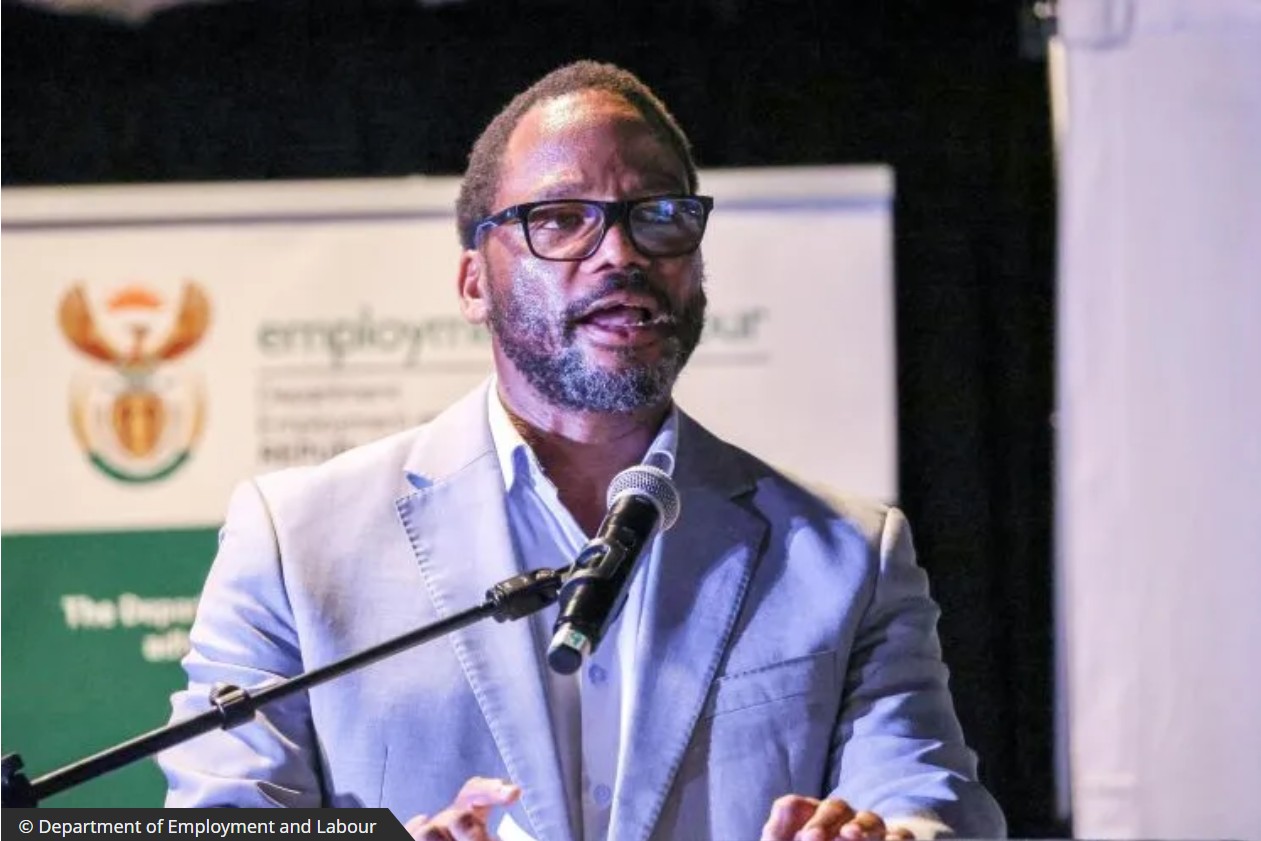
Delivering the keynote address, Deputy Minister of Employment and Labour Hon. Jomo Sibiya emphasised that every worker has the right to return home safe and healthy at the end of the working day. He described safe and healthy working conditions as a fundamental human right rooted in both international labour standards and South Africa’s Constitution.
Representing the International Labour Organization, Technical Officer Simphiwe Mabhele said the conference theme was closely aligned with the ILO’s global mission, particularly after occupational safety and health was recognised as a Fundamental Principle and Right at Work. He stressed that workplace safety is not optional, technical or negotiable, but a basic right that protects human dignity.
Mabhele also highlighted the changing landscape of occupational health and safety, noting that while unsafe behaviour, complacency and shortcuts remain serious challenges, technologies such as artificial intelligence, wearable devices and predictive analytics are opening new possibilities for better prevention. He warned, however, that innovation cannot replace the need for a strong workplace safety culture.
The conference also spotlighted the heightened vulnerability of young workers. Bulelwa Huna, Senior Specialist at DEL, cautioned that inexperience, limited hazard awareness and inadequate supervision continue to place younger workers at greater risk. She called for practical interventions that go beyond legal compliance, including better induction, training and supportive workplace cultures.
Sector-specific concerns were also raised. Phumudzo Maphaha, Senior OHS Specialist for construction and major hazard installations, pointed to ongoing skills gaps, weak training and insufficient professional registration as key factors contributing to incidents in the construction sector. He stressed the importance of ensuring qualified professionals are involved from project planning through to completion.
Data presented during the conference underscored the urgency of the issue. In the metals sector alone, more than 18,800 injury claims, 232 disease claims and 41 fatalities were recorded in the 2025 financial year. Common injuries included eye injuries, finger wounds and hand-related incidents, while occupational diseases included noise-induced hearing loss and respiratory illnesses. Nationally, the Compensation Fund recorded more than 127,000 occupational injury claims and 928 disease claims, highlighting the continuing human and economic cost of unsafe workplaces.
Speakers repeatedly stressed that occupational health and safety is a shared responsibility. Employers, workers, regulators and institutions were all urged to deepen cooperation, while workers were recognised as critical partners in identifying hazards and shaping practical workplace solutions through safety committees and reporting systems.
Closing the conference, Deputy Minister Sibiya called for stronger action against non-compliance, warning that repeated safety failures undermine worker dignity, fair competition and economic stability. He urged stakeholders to move decisively from a compliance-based mindset to a prevention-centred approach, saying compliance may be the starting point, but prevention must remain the destination.
The conference also served as a valuable professional development platform for occupational health and safety inspectors. New and experienced inspectors engaged in mentorship, knowledge-sharing and reflection on the evolving challenges facing enforcement and regulation in South Africa’s occupational health and safety environment.
As discussions drew to a close, delegates highlighted the growing role of digitalisation and artificial intelligence in hazard detection, risk prediction and training, while acknowledging the need to manage new risks associated with technological change. The broader message was clear: policy commitments must now be translated into practical workplace action.
The National OHS Conference 2026 ended with a unified call to strengthen South Africa’s culture of prevention and ensure workplace safety is treated not simply as a legal requirement, but as a cornerstone of dignity, productivity and sustainable development..