



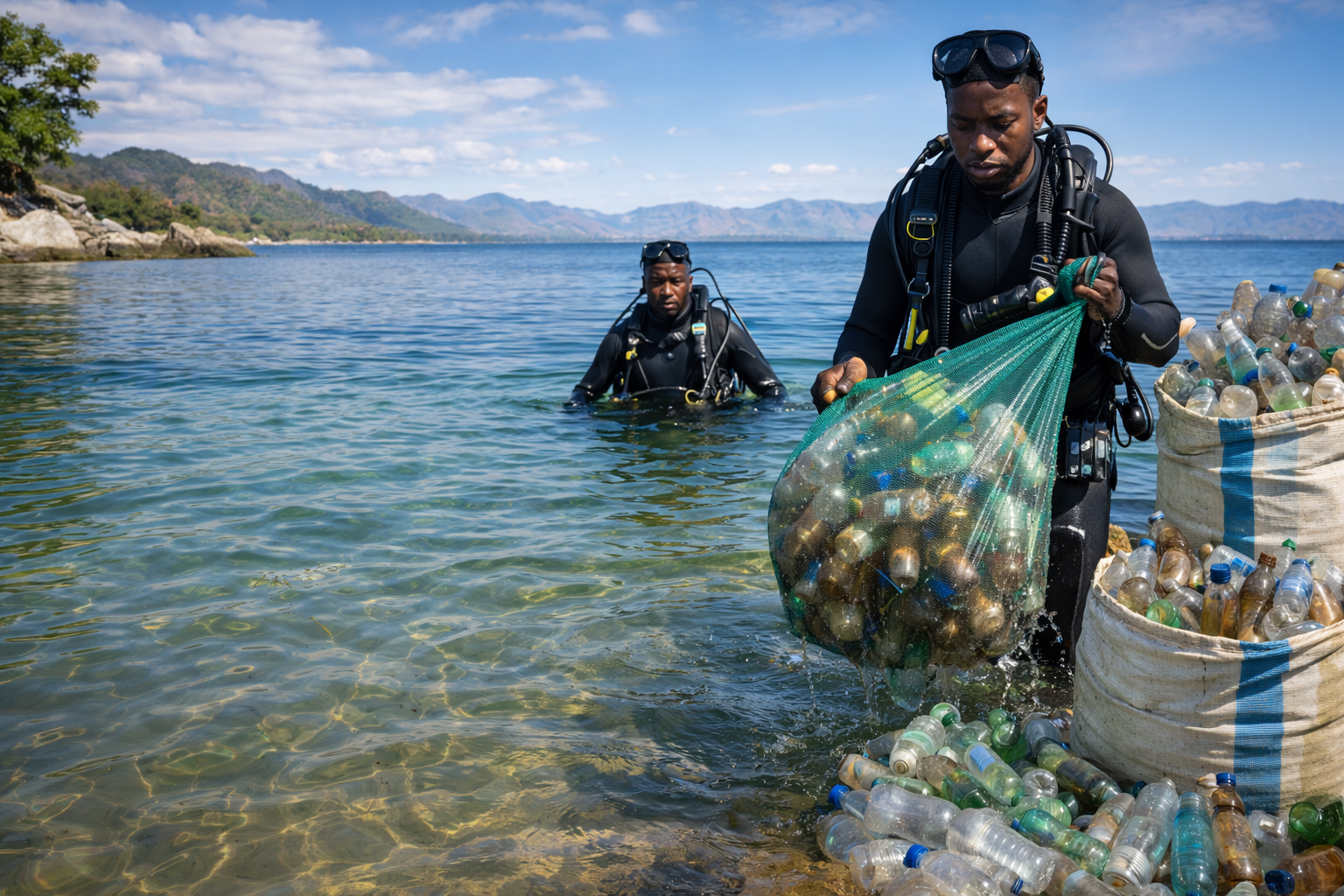
CAPE MACLEAR, MALAWI – Divers in Cape Maclear have launched a volunteer clean-up initiative to help protect Lake Malawi, one of Africa’s most important freshwater ecosystems, from growing plastic pollution.
Working under the Health, Education, Environment, and Economic Development (HEEED) nonprofit organisation, the divers are now combining conservation efforts with underwater waste collection. In recent days, teams have been retrieving plastic bottles and other debris from the lake bed, with much of the waste being creatively recycled into household items rather than discarded.
“We beckon tourists to see our lake, so we must keep it clean,” said Alex Basikolo, a ranger with Lake Malawi National Park. “We are protecting underwater breeding grounds. If there is too much garbage, the fish population will decrease, threatening both the ecosystem and our livelihoods.”
A UNESCO World Heritage Site, Lake Malawi faces mounting environmental pressure despite Malawi’s 2025 ban on thin plastics. Pollution from agricultural runoff, human waste, and indiscriminate dumping continues to threaten the lake’s fragile ecosystem. According to the National Waste Management Strategy, more than 70 percent of the 75,000 metric tonnes of plastic products generated in Malawi are improperly disposed of.
HEEED says the initiative is also aimed at reducing the long-term threat of microplastics to Lake Malawi’s endemic fish species and aquatic habitats.
“We really need financial support to scale this work,” said Violet Zakaria, HEEED Manager. “This is currently a passion-driven initiative, but Lake Malawi is a premier tourist destination, and visitors expect and deserve a clean, healthy environment.”
Through volunteer action and creative recycling, Cape Maclear’s divers are showing that community-led solutions can play a vital role in safeguarding Lake Malawi for future generations.