



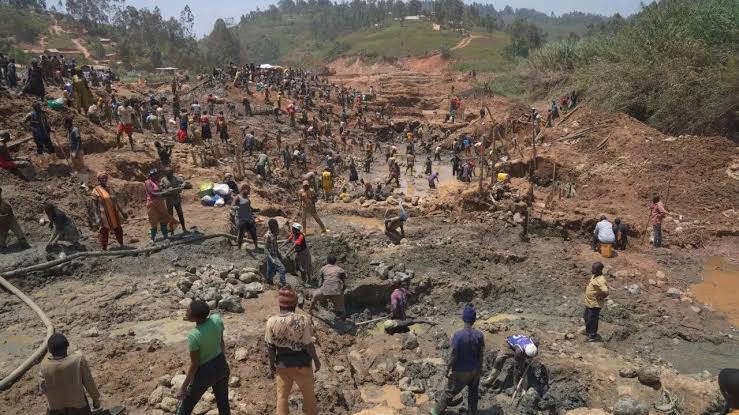
At least 173 people were reported dead across three catastrophic mining and transport incidents in Africa within ten days in August 2026. For ASHEPA, the tragedies raise a fundamental question: can Africa genuinely call development successful when workers and communities continue to die from preventable risks?
ASHEPA News | 23 August 2026
Does the market value of gold justify the death of a miner? Does a production target justify exposing workers to conditions that could bury them alive? Should farmers and agricultural workers have to risk drowning simply to reach the fields from which they earn their livelihoods?
The answer is unequivocally no.
No quantity of gold, platinum, agricultural produce, industrial output, infrastructure development or economic growth can justify the preventable loss of human life.
Yet three major incidents across Africa during a ten-day period in August 2026 have once again exposed serious gaps in the way occupational and livelihood-related risks are controlled across the continent.
On 10 August, 14 suspected illegal miners died near Rustenburg in South Africa after the walls of an excavated area collapsed. Eight others were rescued and taken to hospital. South Africa’s Department of Mineral and Petroleum Resources later clarified that the incident occurred within the boundaries of an area covered by a valid mining permit and that the site was a surface opencast mining operation, rather than an underground mine shaft.
Eight days later, catastrophe struck the Zamboye artisanal gold-mining area in the Central African Republic. Reports placed the provisional death toll at at least 107 people, with recovery operations continuing and concerns that additional victims could remain beneath the debris. Heavy rainfall and instability around hand-dug mining areas were among the factors discussed following the disaster.
Then, on 20 August, an overloaded boat carrying passengers, including farmers and agricultural labourers travelling towards rice-growing areas, capsized near Gorau in Sokoto State, Nigeria. Authorities subsequently reported at least 52 deaths, with many of the victims reported to be children.
Taken together, currently reported figures from these three incidents amount to at least 173 lives lost.
Different countries. Different circumstances. Different industries. But the same devastating outcome: people left home expecting to work, support their families or participate in economic activity and did not return.
For the African Safety, Health and Environmental Professional Association (ASHEPA), these tragedies should not be treated as unrelated disasters that briefly dominate headlines before being forgotten. They should force governments, regulators, employers, professional institutions and communities across Africa to confront a much larger question: How many more Africans must die before occupational safety becomes a continental development priority?
August 2026: A Ten-Day Warning
| Incident | Location | Reported fatalities |
| Rustenburg excavation collapse | South Africa | 14 |
| Zamboye artisanal gold-mine landslide | Central African Republic | 107+ |
| Gorau/Sokoto boat capsize | Nigeria | 52+ |
| Reported total | 173+ |
Africa’s Mineral Wealth Must Not Be Paid for With Human Lives
Africa possesses some of the world’s richest deposits of gold, platinum, cobalt, copper, diamonds and other minerals critical to global industries and the transition to cleaner technologies.
But beneath the statistics on mineral exports are thousands of artisanal and informal miners working in conditions dramatically different from those found in highly regulated industrial operations.
In many communities, artisanal mining is not undertaken because workers have carefully chosen a high-risk occupation. It is undertaken because families need income. Poverty, unemployment, informal labour markets and limited alternative livelihoods frequently push people towards hazardous mining environments where geological information, engineered ground support, competent supervision, emergency response, protective equipment and formal risk assessment may be absent.
The Zamboye disaster demonstrates the potentially catastrophic consequences. More than 100 lives can disappear in moments when large numbers of people work around unstable excavations without sufficiently effective controls.
Africa must therefore reject the idea that artisanal or informal status somehow places workers outside the reach of occupational protection.
A worker does not lose the right to life because the work is informal. A miner does not become less deserving of protection because the operation is small-scale. And poverty should never become an acceptable explanation for preventable death.
The African Mining Vision already envisages a mining sector that is sustainable and well governed, safe and healthy, environmentally responsible and capable of harnessing artisanal and small-scale mining to improve livelihoods and stimulate development. The challenge is turning those principles into everyday reality.
Rustenburg Exposes the Complexity of Illegal and Migrant Work
The Rustenburg tragedy presents another difficult issue. South African authorities said 14 suspected illegal miners were killed and eight were injured after the walls of an excavated area collapsed while they were allegedly manually digging for platinum-group metals. Most of the deceased were understood to be Basotho nationals, while the eight people initially rescued were reported to be undocumented Lesotho nationals.
Illegal mining unquestionably creates serious law-enforcement, economic, environmental and security challenges. Governments have a legitimate responsibility to protect mineral resources and prevent criminal exploitation. But enforcement and protection of human life cannot be treated as competing objectives.
An individual’s immigration status, employment arrangement or involvement in unauthorised economic activity does not make that person’s death less significant.
The incident also demonstrates why occupational risk in Africa increasingly has a cross-border dimension. Workers migrate between African countries for mining, construction, agriculture, transport, domestic work and numerous other activities. Vulnerable migrants may find themselves performing some of the most dangerous work while having the least access to formal protection.
That reality requires stronger cooperation between governments and Regional Economic Communities. A worker should not cross a national border and simultaneously cross outside the boundaries of basic human protection.
Sokoto: When the Journey to Work Becomes a Hazard
The tragedy in Sokoto State broadens the discussion beyond traditional definitions of workplace safety. Reports indicate that the overloaded vessel was carrying people, including farm owners and labourers, travelling towards rice farms when it capsized.
For many rural African communities, economic activity depends upon informal transport systems. Workers reach farms, mines, fishing communities, construction projects and markets using boats, motorcycles, minibuses, trucks and other forms of transport that may operate with limited regulatory supervision.
That creates an important occupational and public safety question: Can a society genuinely claim that work is safe if people must repeatedly risk their lives simply to reach it?
Water transport safety requires enforceable passenger limits, appropriate life jackets, competent operators, vessel inspection, maintenance requirements, weather monitoring and effective emergency rescue arrangements. The same principle applies to road transport.
Safe work must increasingly be understood as part of a wider system that considers not only what happens at the worksite, but also how workers are transported and how vulnerable communities participate in economic activity.
ASHEPA Calls for a Continental Minimum OSHE Protection Framework
The African Safety, Health and Environmental Professional Association believes the time has come for Africa to move towards stronger continental harmonisation of Occupational Safety, Health and Environmental protection.
ASHEPA is calling for serious dialogue among the African Union, African governments, Regional Economic Communities, employers, labour organisations, professional institutions, academic bodies and civil society towards the development of an African Minimum Occupational Safety, Health and Environmental Protection Framework.
Such a framework would not need to replace national legislation. Instead, it should establish a minimum continental protection floor – a set of principles below which no African worker should fall.
At the centre of that framework should be one fundamental principle:
| “Every person participating in economic activity in Africa should have access to minimum protection against foreseeable occupational risks, regardless of nationality, migration status, employment arrangement, company size, industry or whether the work is performed within the formal or informal economy.” |
This should become a defining principle of Africa’s next phase of economic development.
ASHEPA President: Growth Must Ultimately Mean More Workers Returning Home Safe
ASHEPA President Wilson Ronnie Odoom has repeatedly emphasised that occupational safety must ultimately be judged by its effect on people rather than by policies existing only on paper.
Speaking previously about ASHEPA’s expansion across Africa, Odoom said stronger continental participation would help carry the Association’s safety message further, “meaning more and more workers will go home safe after their day activity at workplace.”
That principle now requires action beyond professional institutions. According to the ASHEPA President, Africa’s governments and industries must begin measuring successful development not only by production, exports, projects completed or economic growth, but by whether the people responsible for creating that economic value survive the process.
PRESIDENTIAL DIRECTIVE
| “Africa must reach a point where preventable occupational deaths are no longer accepted as an unavoidable cost of development. Whether a person works for a multinational company, a contractor, an artisanal mining group, a farm, a small business or within the informal economy, that life carries the same value. Our laws, our enforcement systems and our industries must reflect that principle.” |
ASHEPA believes the safety profession must also extend its reach beyond corporate workplaces. Professional expertise is urgently needed in artisanal mining communities, agriculture, transport associations, small businesses, informal construction, vocational institutions and other environments where conventional occupational safety systems often have little presence.
From Legislation to Protection on the Ground
Many African countries already have occupational health and safety legislation. The challenge is not always the total absence of law. It is frequently the gap between what legislation requires and what happens where people actually work.
A regulation cannot protect a miner if nobody reaches the mining community to enforce it. A prohibition against overloading cannot save passengers if unsafe vessels continue operating without intervention. A requirement for risk assessment achieves little if vulnerable workers have never received basic hazard-awareness training. A national inspectorate cannot effectively supervise thousands of workplaces if it lacks personnel, transport, technical capability, digital systems and enforcement resources.
Africa therefore needs to move from a predominantly reactive model – investigating deaths after catastrophe – towards a genuinely preventive one.
What Must Change?
Formalise and Support Artisanal and Small-Scale Mining
Governments should accelerate the registration and formalisation of artisanal mining operations while providing practical pathways towards safer operations.
That support should include geological and geotechnical information, safer excavation methods, ground-stability controls, emergency preparedness, hazard identification, competent supervision and access to appropriate protective equipment.
Formalisation must not mean paperwork alone. It should create a route through which previously vulnerable miners become visible to regulators, training institutions and safety systems.
Strengthen Inspection and Enforcement
Occupational safety authorities, mining regulators, transport agencies and environmental regulators require sufficient resources to enforce existing requirements.
High-risk workplaces should receive risk-based inspections, and regulators must have the authority and practical capacity to stop work where conditions create imminent danger to life. Serious violations must attract meaningful consequences.
Passing legislation without creating the ability to enforce it is not enough.
Protect Informal Workers
Africa’s occupational safety systems must increasingly reflect the reality of African labour markets. Millions of people earn livelihoods through informal economic activity.
Safety education therefore needs to move into communities rather than waiting for informal workers to enter formal corporate systems. Simplified risk assessment tools, community training, occupational health outreach and practical guidance could prevent thousands of injuries and deaths.
Strengthen Cross-Border Worker Protection
Regional bodies including SADC, ECOWAS, the East African Community and other Regional Economic Communities have an important role to play in improving cooperation on worker protection.
Minimum occupational safety principles should increasingly accompany Africa’s growing labour mobility. Nationality should never determine the value placed on a worker’s life.
Make Worker Transport Part of Safety Management
Companies, contractors and authorities should assess risks associated with transporting workers to remote workplaces.
Where boats are routinely used, requirements relating to passenger capacity, life jackets, operator competence, vessel condition and emergency response should be strictly enforced. Employers arranging road transport should similarly ensure appropriate vehicle condition, driver competency and journey-risk controls.
Integrate Climate Risks Into Occupational Safety
Climate variability increasingly affects occupational risks. Heavy rainfall can destabilise excavations and mining areas. Flooding can transform ordinary transport routes into dangerous waterways. Extreme heat can expose agricultural, construction and industrial workers to serious health risks. Storms can threaten infrastructure and outdoor activities.
Climate adaptation and occupational safety can therefore no longer develop as separate disciplines. Risk assessments must consider changing environmental conditions.
Africa Must Count Every Occupational Death
One of the continent’s greatest challenges is the lack of comprehensive occupational injury and disease data, particularly in informal sectors.
Deaths occurring at large regulated workplaces may be formally investigated and recorded. Deaths involving artisanal miners, informal labourers, casual workers and rural economic activities may never appear in national occupational statistics. That makes the real human cost extremely difficult to quantify.
ASHEPA supports stronger national occupational injury and disease surveillance systems and, ultimately, the establishment of a continental African OSHE data and knowledge platform.
Governments should be able to answer fundamental questions:
- How many people died because of work-related activities last year?
- Which sectors are responsible for the greatest number of fatalities?
- How many workplaces were inspected?
- How many dangerous operations were stopped before somebody was killed?
- What occupational diseases are affecting African workers?
- Which interventions are reducing injuries?
Without reliable data, prevention becomes guesswork.
Employers Must Look Beyond Their Direct Employees
The responsibility also falls on corporate Africa. Modern industries increasingly operate through complex networks of contractors, subcontractors, suppliers, transport providers and informal economic actors.
Companies must therefore look beyond their direct payroll. Boards and senior management should ask whether contractors receive equivalent safety protection, whether procurement decisions encourage unsafe cost-cutting, how vulnerable workers in supply chains are treated and whether people have a genuine ability to refuse dangerous work without losing their livelihoods.
Production cannot be considered successful simply because a target was achieved. The question must also be: At what human cost was it achieved?
Safety Is a Fundamental Right – and a Shared Responsibility
In 2022, the International Labour Organization elevated a safe and healthy working environment to the status of a fundamental principle and right at work.
That principle is particularly significant for Africa. Workplace safety cannot remain a privilege associated primarily with multinational companies, sophisticated industrial operations and workers holding formal contracts.
It must reach the miner with a shovel. The farmer travelling across a river. The construction labourer. The truck driver. The waste collector. The factory employee. The casual worker. The migrant worker. The young apprentice. And the millions of other Africans whose work sustains families, communities and national economies.
Communities also have a role. People should feel empowered to question unsafe conditions, refuse dangerously overloaded transport where realistic alternatives exist, report unstable excavations and challenge practices that place life at unnecessary risk.
Safety culture is created not only by ministries and companies, but by societies that refuse to normalise preventable death.
Africa’s Greatest Resource Is Its People
The tragedies in Rustenburg, Zamboye and Sokoto should force Africa to reconsider how it measures development.
The continent possesses extraordinary natural wealth. But Africa’s greatest resource is not gold. It is not platinum. It is not oil, copper, cobalt, diamonds or agricultural land.
Africa’s greatest resource is its people.
If gold is extracted but miners are buried in the process, that cannot be called sustainable development. If agricultural productivity rises while people drown travelling to farms, economic statistics tell only part of the story. If industrial output increases while preventable occupational injuries and diseases destroy families, the cost of that growth has been calculated incorrectly.
Africa should aspire to become a continent where mines operate without burying miners, infrastructure is built without sacrificing construction workers, agricultural development does not require farmers to gamble with their lives, and economic growth strengthens rather than diminishes human dignity.
The deaths reported across these three incidents in August 2026 must therefore become more than statistics. They must become a warning. They must lead to better laws. Better enforcement. Better engineering. Better transport controls. Better emergency preparedness. Better data. Better professional support. And, above all, a stronger continental commitment to prevention.
No ounce of gold is worth a miner’s life.
No harvest is worth a worker’s life.
No production target is worth a human life.
EVERY AFRICAN WORKER. EVERY WORKPLACE. EVERY COUNTRY.
EVERYONE DESERVES TO RETURN HOME SAFE.
About ASHEPA
The African Safety, Health and Environmental Professional Association (ASHEPA) is a pan-African professional association advancing Occupational Safety, Health, Environmental Management and sustainability across the continent. Through professional development, education, advocacy, technical collaboration and continental networking, ASHEPA seeks to strengthen the competence of HSE professionals and contribute to safer workplaces, healthier communities and more sustainable African development.