



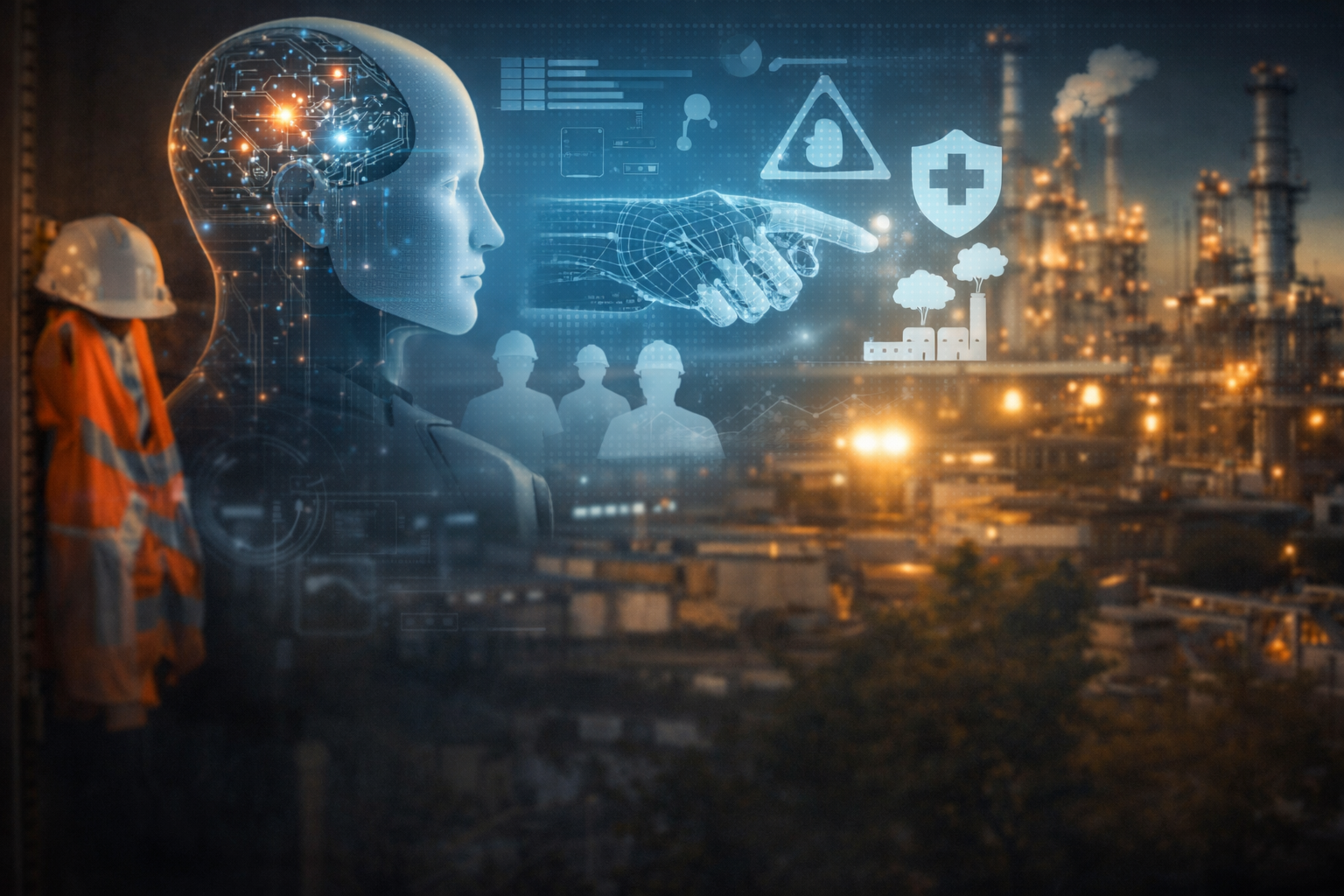
The maiden episode of the ASHEPA HSE Roundtable Podcast delivered a timely and thought-provoking conversation on one of the most important issues shaping the future of Occupational Safety, Health and Environment (OSH&E): the role of Artificial Intelligence (AI) in strengthening prevention, improving monitoring, and protecting both people and the environment. In this episode, ASHEPA Roundtable host Hussein Mohamed Fikry sat down with ASHEPA President Wilson Ronnie Odoom for an insightful discussion that combined leadership experience, practical safety thinking, and a forward-looking perspective on innovation.
The ASHEPA HSE Roundtable continues to serve as an important platform where HSE professionals are hosted by Hussein Mohamed Fikry to explore critical Occupational Safety, Health and Environmental topics in depth. In this first episode, the discussion stood out not only for its relevance, but also for its clarity, depth, and professional insight into how AI can support stronger safety cultures across workplaces and industries in Africa.
From the beginning of the conversation, President Wilson Ronnie Odoom positioned safety as more than compliance, rules, or procedures. He described HSE as a calling rooted in protecting lives, preserving health, and creating workplaces where people can work with confidence and dignity. That human-centered perspective gave the interview a strong foundation and reminded listeners that even the most advanced technologies must remain focused on people.
A major highlight of the discussion was the shared view that AI has the potential to move organizations from a reactive safety culture to a preventive one. Rather than waiting for incidents to happen before investigations begin, AI offers an opportunity to identify patterns, detect weak signals, and reveal early warning signs before harm occurs. This shift from reaction to prevention is one of the most promising contributions AI can make to modern HSE practice.
During the interview, practical examples helped bring this vision to life. The discussion explored how AI-enabled systems can improve situational awareness on construction sites, identify unsafe interactions in active work zones, and support real-time recognition of hazardous conditions. It also examined how industrial operations can benefit from AI through the analysis of sensor data such as temperature, vibration, pressure, air quality, and emissions, allowing organizations to respond to abnormal conditions before they develop into incidents, exposures, or environmental damage.
The conversation also gave strong attention to occupational health, particularly the risks that build gradually and often remain invisible until serious harm has occurred. Issues such as heat stress, fatigue, noise exposure, dust inhalation, toxic substances, repetitive strain, and poor air quality were identified as areas where AI can become a powerful ally. By combining data from wearables, environmental monitors, exposure systems, and work patterns, AI can help organizations detect harmful trends earlier and act faster. This was presented not simply as a technical improvement, but as a form of responsible leadership.
Importantly, the interview did not present AI as a perfect or automatic solution. One of the strongest elements of the discussion was its balanced and ethical perspective. President Wilson Ronnie Odoom made it clear that technology without ethics can become surveillance, and data without trust can create fear rather than protection. This message is especially important for today’s workplaces, where the success of digital safety systems depends not only on capability, but also on transparency, worker involvement, and respect for human dignity.
That emphasis on trust was one of the most compelling takeaways from the episode. The interview stressed that workers must understand what is being monitored, why it is being monitored, and how the information will be used. When AI is introduced openly and responsibly, it can strengthen prevention and build confidence. When it is introduced poorly, it risks undermining the very culture it is supposed to support. This insight gave the episode an important human note and reinforced the principle that safety technology must always serve people, not control them.
Another valuable theme from the conversation was the relationship between AI and human judgment. The discussion firmly rejected the idea that technology should replace safety professionals. Instead, it presented the future of HSE as a partnership: AI brings speed, scale, and pattern recognition, while human leaders bring judgment, experience, context, empathy, and accountability. This balanced view reflects the kind of practical leadership needed across Africa’s fast-changing workplaces and industries.
The rapid-fire segment of the episode added further depth by revealing President Wilson Ronnie Odoom’s clear leadership philosophy. His responses reinforced the importance of listening to frontline workers, closing the gap between safety language and safety practice, and building Africa’s future on a strong culture of prevention, shared responsibility, and people-first leadership. These reflections gave the episode added value for both experienced HSE leaders and young professionals seeking direction in the field.
Overall, this ASHEPA Roundtable episode was a rich and highly relevant conversation that offered both strategic insight and practical value. It showed that the conversation around Artificial Intelligence in HSE must go beyond excitement about innovation and focus on how technology can be applied ethically, responsibly, and effectively to prevent harm. Under the thoughtful hosting of Hussein Mohamed Fikry and through the experienced perspective of President Wilson Ronnie Odoom, the episode delivered a professional and timely message: the future of safety in Africa will be stronger when innovation is guided by leadership, prevention, and respect for people. As ASHEPA continues to create space for meaningful professional dialogue through the HSE Roundtable Podcast, this first episode sets a strong standard for the conversations ahead. It is a powerful reminder that the future of Occupational Safety, Health and Environment in Africa will depend not only on new tools, but on the wisdom, ethics, and leadership with which those tools are used