



Botswana’s copper exploration sector is gaining increased attention as mining companies combine traditional geological methods with artificial intelligence to improve target identification and reduce exploration risk. The shift is helping reshape how mineral opportunities are assessed across southern Africa’s copper belt, particularly in underexplored areas with strong geological potential.
The country’s mining licence framework is designed to support exploration and production while also encouraging foreign investment and local economic participation. Botswana’s system includes Prospecting Licences for early-stage exploration, Mining Licences for commercially viable projects, Retention Licences for proven deposits awaiting improved market conditions, and Special Grant Licences for large-scale operations that require longer-term development structures.
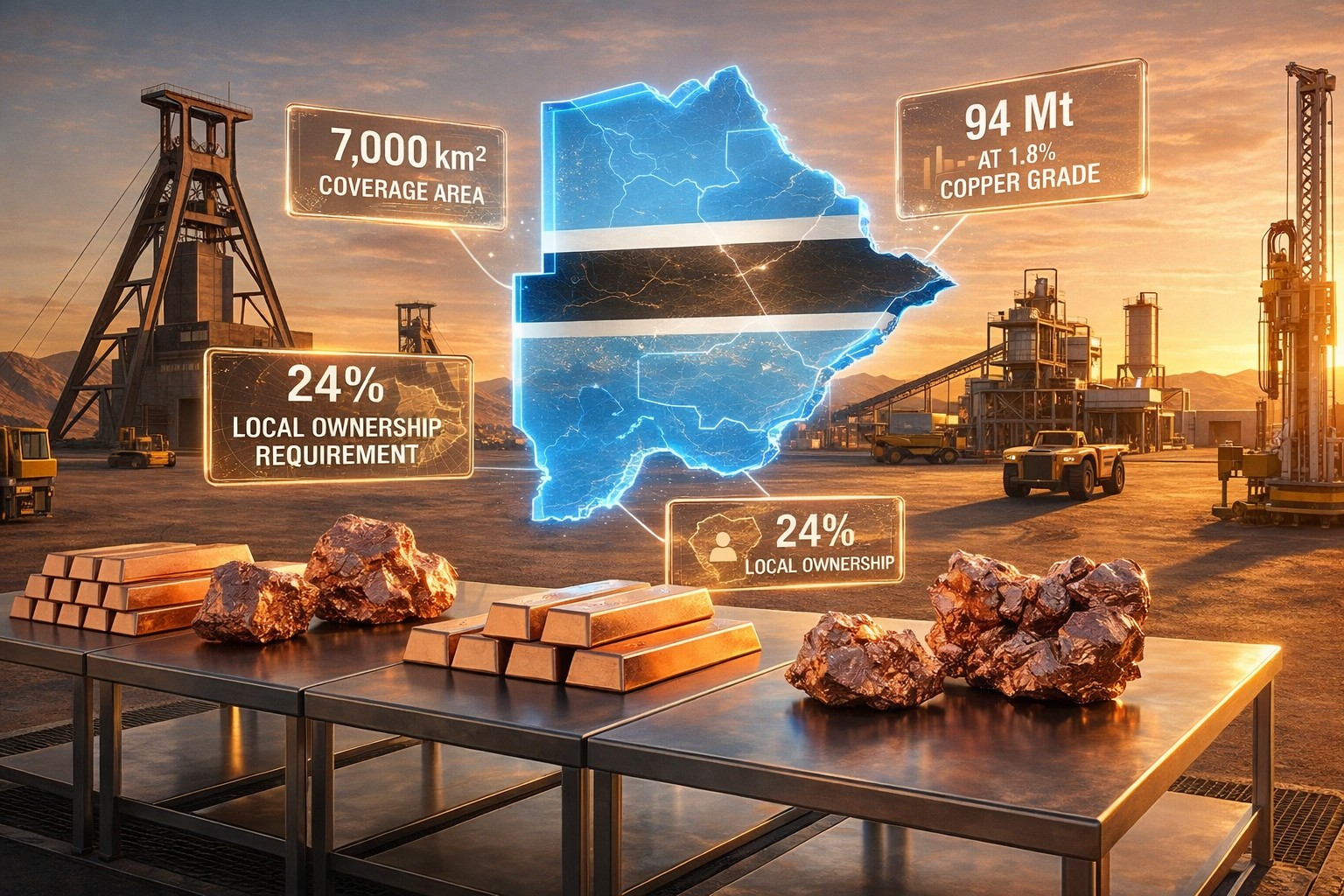
Recent policy changes have added a new layer to the investment landscape. Mining licences granted after October 2025 must comply with local ownership requirements that allocate 24 percent of project equity to Botswana citizens or citizen-controlled entities. New mining operations must also contribute to environmental rehabilitation funds to ensure long-term site restoration and environmental management.
Among the companies advancing exploration in the country is Botswana Minerals, which has launched Phase 1 operations across its copper licence portfolio in the Ngamiland region of north-western Botswana. The company is targeting the north-eastern section of the Damara Belt, an area regarded as underexplored but highly prospective for copper mineralisation. Its strategy combines artificial intelligence with conventional geological analysis to refine targets and improve the accuracy of future drill planning.
Botswana’s geological appeal is reinforced by the broader Kalahari Copper Belt and the Damara Belt, both of which are known for favourable structural conditions and widespread copper-bearing formations. The country also benefits from existing mining infrastructure, logistics networks and industry expertise, all of which strengthen the case for sustained exploration and future development.
Global demand trends are also supporting renewed interest in copper. The growth of electric vehicles, renewable energy systems and battery storage technologies is increasing demand for the metal, making copper-rich jurisdictions such as Botswana more attractive to investors and exploration firms. At the same time, technological advances in artificial intelligence, geophysical surveys and predictive modelling are improving the efficiency of exploration programmes and helping companies make more informed decisions.
As policy reform, market demand and data-driven exploration continue to converge, Botswana is positioning itself as a significant player in the next phase of copper development in Africa.