



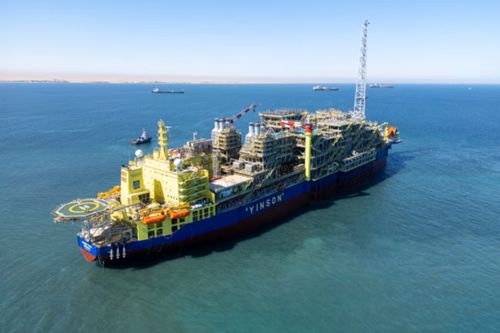
Angola has taken a significant step in offshore decarbonization with the Agogo Floating Production Storage and Offloading vessel (FPSO) becoming the first offshore oil platform to operate a carbon capture and storage (CCS) system under real production conditions.
The milestone places Angola at the forefront of efforts to reduce emissions from offshore oil operations while maintaining production. It also signals a new direction for the energy industry, where oil production and emissions-reduction technologies are increasingly expected to operate side by side.
The system was developed through a collaboration between Azule Energy, Yinson Production and Carbon Circle. It captures carbon dioxide generated during the FPSO’s operations before the gas can be released into the atmosphere. The technology uses an advanced amine-based solvent known as CESAR1, designed to improve capture efficiency while requiring less energy, an important advantage in offshore environments where both space and power are limited.
Unlike conventional carbon capture systems installed onshore, the Agogo system operates in a floating offshore setting, where engineering conditions are more complex and operational constraints are tighter.
The Agogo FPSO, part of the Agogo Integrated West Hub project in Block 15/06 offshore Angola, serves a deepwater development that includes the Agogo and Ndungu fields. The vessel achieved first oil on 29 July 2025, four months ahead of schedule, marking the beginning of commercial production and revenue generation.
Following first oil, the FPSO moved into a 15-year firm charter agreement with Azule Energy after the issuance of a Provisional Operational Readiness Certificate in August 2025. Valued at more than USD 5 billion, the contract provides long-term revenue visibility for Yinson Production and strengthens operational certainty within Angola’s offshore petroleum sector.
The vessel has a production capacity of around 120,000 barrels per day and can store up to 1.6 million barrels, supporting Angola’s efforts to sustain offshore output while modernizing its energy infrastructure.
The Agogo CCS system demonstrates that oil production and emissions-reduction technology can be integrated on the same offshore asset, an issue that is becoming increasingly important for investors, regulators and financial institutions focused on environmental performance.
As one of Africa’s largest oil producers, Angola’s decision to integrate emissions-reduction technology into a flagship offshore project strengthens its position as a leader in balancing hydrocarbon development with cleaner operations. That positioning is becoming more important in global energy markets, where environmental performance is playing a growing role in investment decisions and project financing.
The 15-year charter with Azule Energy also offers predictable long-term cash flows for Yinson Production, while reinforcing confidence among lenders and partners in Angola’s ability to support stable, long-duration offshore contracts.
With carbon pricing policies and emissions standards tightening in many parts of the world, early adoption of offshore carbon capture technology could give Angola’s oil sector a strategic advantage in attracting capital from investors with strict Environmental, Social and Governance (ESG) requirements.
The Agogo FPSO project stands at the intersection of traditional oil economics and the growing push for decarbonization. While first oil remains the key financial milestone for offshore projects, the addition of carbon capture technology points to a broader shift in how future developments may be designed, financed and assessed.