



The factory that polluted this Congolese town has been dismantled, but the toxic lead it left behind continues to threaten lives in Vindoulou, a community in the Republic of Congo where residents say promises of cleanup and medical care have gone unfulfilled.
More than a year after the government shut down a battery recycling facility near the town, families affected by lead poisoning say they have received no treatment, no soil cleanup, and no further updates from authorities.
Cyrille Traoré Ndembi, a father of four, said he believed help would come for his youngest child, Cyrfanie, after the country’s environmental minister ordered action against the plant in December 2024.
The factory, operated by Metssa Congo, was accused of releasing lead into the air, contaminating the soil, and poisoning nearby residents, including children. Following the closure, the minister ordered the company to pay about $18,000 to support cleanup efforts and medical care for the affected community.
The World Health Organization also pledged support. In a letter to Ndembi, the WHO’s representative in the country said the agency would work with the government to “take adequate measures.”
But since then, residents say there has been silence.
They say the payment ordered by the government never arrived. Although the factory was taken apart, no follow-up environmental tests were carried out, no victims received treatment, and the polluted soil was never removed.
“It’s the status quo, as if nothing had happened,” Ndembi said. “It is truly frustrating to deal with leaders who fail to grasp the risks facing their fellow citizens who are being poisoned by lead.”
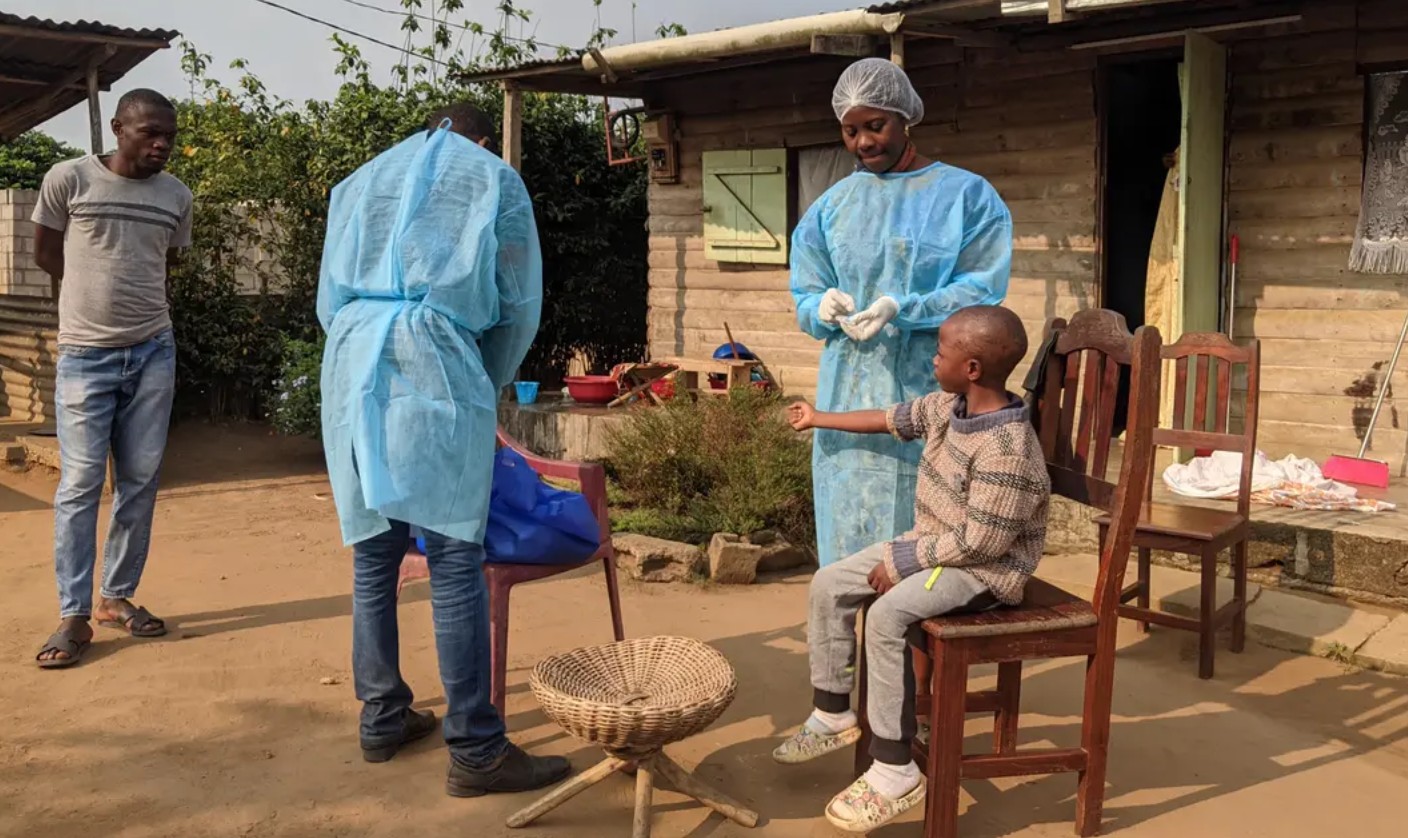
The Examination, which has been reporting on Vindoulou since 2023, previously commissioned blood tests for 10 volunteers in the area. All 10 were found to have lead poisoning, including four children.
Cyrfanie had already been tested months earlier through a separate effort organized by Ndembi. Her blood lead level measured 53.4 micrograms per deciliter — a concentration high enough under international standards to require hospitalization for urgent treatment. At that level, experts warn, lifelong brain damage is highly likely.
Although many countries, including the Republic of Congo, have laws requiring polluters to pay for cleanup, enforcement remains weak across much of Africa. In some of the few successful cleanups on the continent, nonprofit environmental organizations have stepped in where governments failed to act.
Metssa Congo is no longer operating, and its former owner, Arun Goswami, could not be located. Goswmai had previously denied the factory was responsible for the poisoning and said the facility operated under international standards with the approval of the Congolese government.
Repeated requests for comment sent to Arlette Soudan-Nonault, the Republic of Congo’s minister for the environment, went unanswered. She had earlier visited Vindoulou and ordered Metssa Congo to cover the cost of blood testing and medical care.
In an interview, Vincent Dossou Sodjinou, the WHO’s representative for the Republic of Congo, said he met with government officials in January. According to him, they agreed to create three study groups — one to test residents for lead exposure, another to examine soil and water, and a third to assess whether plants and livestock had also been contaminated.
“The first step is to conduct a health assessment,” Sodjinou said. “As soon as we have results, we can take action.”
Still, he acknowledged there is no clear timeline and said he does not expect testing to begin soon, citing the country’s long-running financial crisis.
Sodjinou also said the WHO does not usually provide direct medical or financial support in cases like this, though it would be willing to coordinate outside funding if a donor came forward.
Vindoulou is not alone. Working with local journalists, The Examination has identified polluting lead battery recycling plants in Cameroon, Tanzania, Ghana, Togo, and other countries.
In Nigeria, reporting by Premium Times and The New York Times exposed lead poisoning in communities near factories that exported recycled lead to the United States. Authorities there have since conducted hundreds of blood tests and gathered nearly 200 air, soil, and water samples. Officials are now trying to determine how much the companies responsible will contribute to cleaning up Ogijo, widely known as Africa’s lead recycling capital.
For experts, the most urgent priority in Vindoulou is environmental cleanup.
Although workers removed the roof and some equipment when the factory was dismantled, the main structure remains standing. Contaminated soil is still present at the site and across surrounding parts of the town, leaving children especially vulnerable because they can ingest lead particles while playing in dust and dirt.
“Lead does not decay or break down or transform into another element over time,” said Esmond Wisdom Quansah, regional programs director for Africa at Pure Earth, a nonprofit that cleans up toxic sites. “This means that unless it’s remediated or cleaned up, the risk will remain for generations.”
Quansah said the cost of making Vindoulou safe cannot be determined without a full site assessment, but he estimated that similar cleanups in the region have ranged from $60,000 to $120,000.
For now, life in Vindoulou continues in the shadow of contamination.
Cyrfanie spent years living with her family in a cinderblock house just meters from the factory walls and still plays in the front garden. Ndembi said she recently moved a few blocks away with her mother. Around them, children continue to walk through the courtyard of the local primary school and kick up dust on the nearby soccer field.
“Closing the factory is a good step,” Quansah said. “However, that is not the end of the environmental hazard.”