



Tensions rose sharply at the opening of what is meant to be the final round of negotiations on the Pathogen Access and Benefit-sharing annex, as African countries rejected the latest draft and warned against another unequal global health deal.
Medical brain drain remains one of the biggest challenges facing Africa’s health sector, as hospitals across the continent continue to lose skilled professionals to countries offering better pay, tools and working conditions.
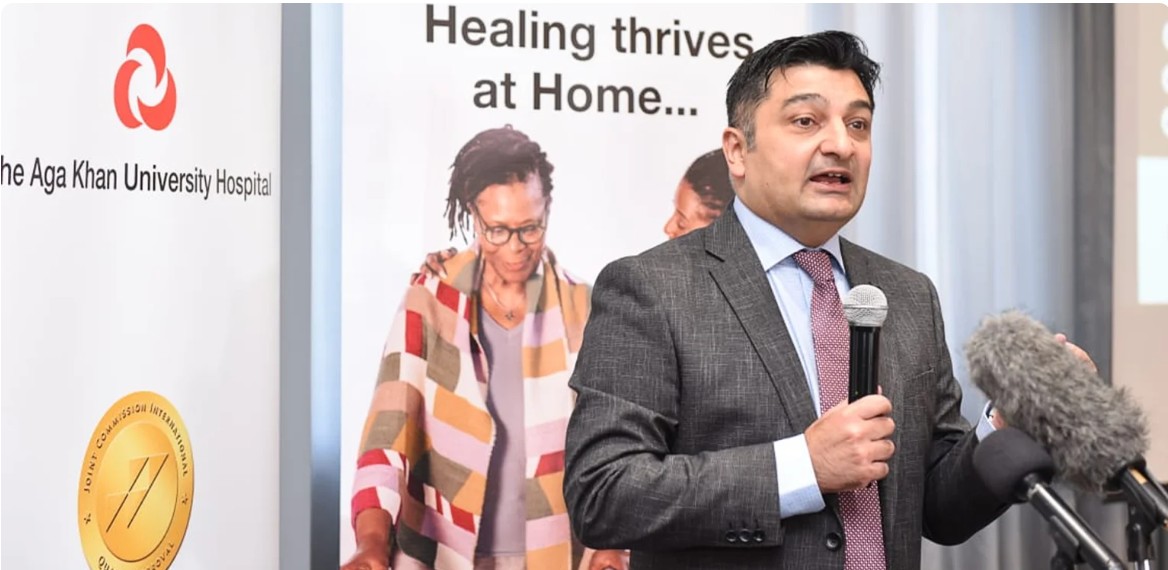
In this interview, the leader of Aga Khan University Hospital explains why retaining doctors and other specialists is so difficult, the role governments must play, and how investment in training, technology and research can help strengthen healthcare systems across Africa.
Medical brain drain remains a major challenge across Africa. Why is it difficult to retain healthcare professionals?
Doctors need three basic things to stay.
First, they went into medicine to help people, but they cannot do that without the right tools. If a radiation oncologist does not have a linear accelerator, if a medical oncologist does not have chemotherapy drugs, or if a cardiologist does not have a catheterisation laboratory, then they cannot practise good medicine. You have to provide the tools that enable them to do their jobs properly.
Second, there has to be a supportive environment for practising medicine. That means a multidisciplinary system where technicians, nurses, laboratories, radiology services and other support structures are available to help clinicians do what they were trained to do. If that environment does not exist, people become frustrated and eventually leave.
The third factor is compensation. If a cardiologist can earn $10,000 in the UK, why would that same person remain in Kenya earning $2,000? They will naturally think about how to provide for their families and educate their children. Unless these three issues are addressed, it will remain difficult to retain the best talent.
What role should governments play in tackling this challenge?
On compensation, I always refer to the Abuja Declaration, which called on African countries to devote far more resources to healthcare so they can pay doctors and nurses properly and invest in technology. But I am not sure we are anywhere close. In many cases, no sub-Saharan African country is spending beyond five per cent of its budget on health.
The intention of governments is often right, and many countries are now discussing universal health coverage. But it must be implemented properly, ethically and without corruption. Otherwise, those funds will not go into equipment, research, education, or better pay for healthcare workers. They will go into someone else’s pocket, and that would be a tragedy. So, greater investment is essential, but governance and accountability are just as important.
How are you addressing retention within the health system?
If you start paying consultants what they truly deserve — $10,000, $15,000 or even $20,000 — then your costs rise sharply, because the doctor is the hospital’s most valuable asset. If that asset is expensive, then naturally the cost of services also increases.
That is why government support is necessary. Through social health funds or universal health coverage, governments can help make it possible to attract and retain quality doctors while ensuring patients are still able to access care. The goal is to pay healthcare professionals fairly without forcing them to sacrifice the wellbeing of their families, while also keeping services within reach for the public. That is the balance that must be achieved.
How is AKUH contributing to building the next generation of healthcare professionals?
Our founding Chancellor made a very important decision: treating patients alone is not enough.
Treating a patient is episodic. You care for them and they go home. But when you train a doctor or a nurse, you make a long-term and sustainable impact — not just on that individual, but on their family, their community and the country where they serve.
That is why 2004 was such an important milestone for us. That was when we transitioned from being simply a hospital to becoming a teaching hospital. Today, we offer undergraduate and residency programmes in several disciplines, including medicine, surgery and anaesthesia, among others. We are also particularly proud of our clinical fellowship programmes.
In the past, anyone who wanted to become a neurologist or a radiation oncologist often had to go to South Africa, the UK or Canada. But our data show that when people leave for training abroad, many do not return. That is why we are deliberately establishing as many fellowship programmes as possible, so healthcare workers can receive specialised training locally without having to leave the continent.
Can you explain the hospital’s evolution into a leading tertiary institution?
We began in 1958 as a maternity home, essentially a secondary care hospital. But institutions, like people, grow and evolve. Over the last six decades, the hospital has developed into what it is today — a teaching, referral and tertiary care institution.
We are now a 300-bed hospital with about 3,000 full-time faculty and staff, including 180 faculty members, which is particularly important because we are a training institution. Each year, we serve around 700,000 patients and operate 54 outreach centres.
We realised that many patients want to come to Aga Khan, but we cannot physically be everywhere. So we are taking services closer to where people live. For many services, patients do not need to travel to a major hospital. A CT scan, dialysis or even a doctor’s consultation can often be delivered in outreach settings. That is part of how we are improving access.
Quality assurance has long been a concern in African healthcare systems. How do you maintain high standards?
In 2013, we became the first hospital in the region to receive accreditation from Joint Commission International, which is widely regarded as a global gold standard in hospital quality. Every three years, they assess us against roughly 1,300 measurable elements. It is rigorous, expensive and demanding.
But patients want confidence that when they come into a hospital, they are placing their lives or the lives of their loved ones in safe hands. Accreditation provides that assurance. At the same time, it pushes us to keep improving and to consistently do the right things — whether in infection prevention, patient identification or surgical safety.
Technology appears central to your model. How are you using innovation?
We were the first hospital in sub-Saharan Africa to acquire a PET scan and a cyclotron. Cancer is a major disease burden, and you cannot treat it well without accurate diagnosis. We also have advanced imaging systems such as a 3-Tesla MRI, SPECT CT, fully automated laboratories and other specialised equipment.
These investments make a real difference. For example, tests that used to take 48 hours can now be completed in under eight hours. That has a direct impact on diagnosis, treatment decisions and patient outcomes.
Artificial intelligence is transforming healthcare globally. What steps have you taken in this area?
There is a great deal of discussion around artificial intelligence, and we fully recognise that it is going to change the way healthcare is delivered. But you cannot build modern technology on top of paper records. That is why, in November 2022, we went live with our electronic health record system, a project that required a $12 million investment.
Now everything is electronic — nursing notes, physician documentation, laboratory systems and radiology. That foundation allows us to begin building AI tools and third-party platforms on top of it.
We are already using AI in X-ray imaging, where scans can be interpreted in seconds, as well as in radiotherapy planning and digital microscopy. Anyone who thinks AI will not transform healthcare is mistaken. The landscape will change dramatically, and we must change with it.
AKUH has also engaged in research programmes. Do you believe clinical trials are important in Africa?
Absolutely. We are trying to generate new knowledge so that pharmaceutical companies do not simply develop drugs elsewhere and then market them here without testing them on African populations.
For example, in triple-negative breast cancer, we found that the genetic profile in Kenyan women differs from what has been observed elsewhere. That means companies should not assume the same drugs will work in exactly the same way or have the same toxicity profile. They need to be tested on our patients too.
In 2020, we had no clinical trials. Today, we are running about 17 to 18 clinical trials with more than 500 patients enrolled. That is proof that Africa can carry out world-class clinical research.
Access to care remains a major concern in developing countries. How do you address affordability?
Because we are a teaching hospital and a high-quality hospital, our services are not cheap. So, the obvious question is: how do poor populations access our care?
We have a patient welfare programme through which we spend close to $3 million each year to support patients who cannot afford treatment. That is one way we try to ensure that quality care is not reserved only for those who can easily pay.
What are your efforts to localise pharmaceutical production?
We are not manufacturing drugs ourselves, but we are working with partners in India and the UK. We have a factory that will begin production in Nairobi. There are about 30,000 drugs in my pharmacy, so clearly we cannot produce everything at once.
We plan to start with a small number of oncology drugs, and production will expand from there. It is an evolutionary process, but it is an important step towards strengthening local pharmaceutical capacity.
What are your efforts to partner with other countries, including Nigeria, to improve healthcare in Africa?
We are open to partnership with anyone. This is a shared learning process — learning from us and learning from others. If any institution in Nigeria, Uganda, Ethiopia or elsewhere wants to collaborate, we are willing to share knowledge, build partnerships and develop joint programmes.
Providing good-quality healthcare is expensive, but it is worth fighting for. Most people may only require primary care, but those who need specialised treatment must be able to get it with the right tools, the right doctors and the right systems. That level of care is necessary, and it is not beyond our reach. We can build it.