


Tensions rose sharply at the opening of what is meant to be the final round of negotiations on the Pathogen Access and Benefit-sharing annex, as African countries rejected the latest draft and warned against another unequal global health deal.
Tension was already high at the start of the sixth, and supposedly final, round of talks on the annex to the Pandemic Agreement, as the African region rejected the latest draft text on the Pathogen Access and Benefit-sharing (PABS) annex.
Pakistan also made it clear that an agreement should not be rushed simply to “manufacture a multilateral success”.
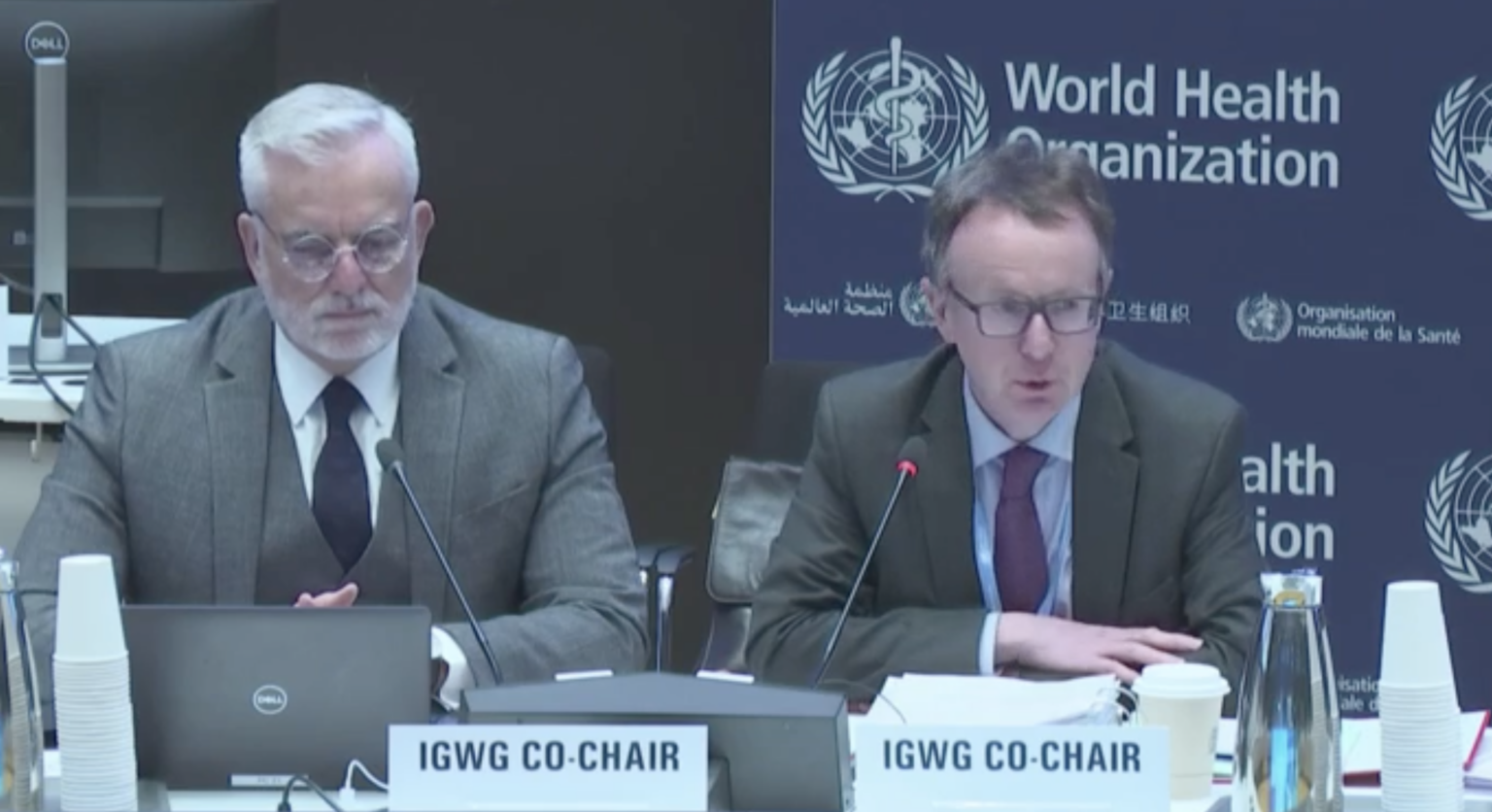
The World Health Organization’s (WHO) Intergovernmental Working Group (IGWG) is aiming to conclude negotiations by Saturday night on how information about dangerous pathogens should be shared, and how any vaccines, therapeutics, and diagnostics developed from that information should also be shared fairly.
If an agreement is reached, the PABS annex could then be presented to the World Health Assembly (WHA) in May for ratification.
But despite the packed schedule, with talks set to run until 11pm each night over the final six days, it remains unclear whether that will be enough. The opening session exposed a deep lack of trust and little willingness to compromise on some of the most sensitive issues.
One African country after another warned they would not allow a repeat of the inequities seen during the COVID-19 pandemic. Delegates from the region insisted they would not back down on key issues, including guaranteed benefits for countries that share pathogens and stronger legal certainty in the annex, including contracts for commercial users of pathogen information.
Speaking for the WHO Africa group as well as Egypt, Sudan, Libya, and Somalia, Burkina Faso said registration should be mandatory for all users of the PABS system. It also called for clearer benefit-sharing obligations and stronger capacity-building for developing countries, including technology transfer.
Taking the lead on Africa’s position, South Africa and Namibia proposed that the draft text circulated by the IGWG Bureau on 9 March should be set aside in favour of the on-screen text that had been under discussion at the close of the fifth IGWG meeting on 14 February.
Namibia said African regional ambassadors had agreed to stick with that earlier text because they had not had enough time to consult their capitals on the new draft.
That position drew a sharp response from Ambassador Tovar da Silva Nunes, co-chair of the IGWG, who accused African countries of trying to “curtail the possibility of the Bureau to actually fulfil the mandate that it was given by the membership”.
“We will obviously proceed to use all of the contributions that have been put forward, including the [IGWG 5] text,” said Tovar.
“We cannot say that we will only use that [IGWG 5] text because we have so many enriching contributions, including, for example, the contracts that were put forward, including the terms of reference for labs and database that were produced by the secretariat.
“So I think there, we are not allowed to impoverish our deliberations by just promising that we will solely see and focus on one text,” he added, later asking Namibia whether it mistrusted the process.
In the end, Namibia proposed a compromise: the Bureau’s version could be retained as a reference document, while the IGWG5 text would serve as the basis for the actual negotiations.
Nigeria, however, warned that even the IGWG5 text remained “contested” and reflected “genuine disagreement between delegations on fundamental questions about sovereignty, about binding obligations, about who bears the cost of pandemic equity and who receives its benefits”.
“That disagreement is real, and this session must resolve its honesty, rather than paper over it with language that creates an appearance of agreement while delivering on none of its substance,” Nigeria said.
Nigeria also proposed that the negotiations focus on what it described as the core unresolved issues: sovereignty safeguards during public health emergencies, legal accountability for laboratories and sequence databases, and technology transfer that “directly enables African pharmaceutical manufacturing”.
Indonesia, speaking on behalf of the regionally diverse Group for Equity, said the negotiations should aim for more than just a political win on paper.
“Multilateralism is not simply about reaching an outcome. It is about producing an outcome that significantly changes the status quo,” Indonesia said.
The country added that some multilateral outcomes may appear to show progress, while leaving underlying inequities largely untouched.
“We are asking for a higher standard. We recognize the pressure of the timeline, but some of the sticky issues are not about time but the willingness to find meaningful solutions. The time pressure alone should not lead us toward weak design, diluted commitments, or lowered expectations,” Indonesia said.
Pakistan, also speaking as part of the Group for Equity, struck a similar tone.
“The PABS Annex must not be turned into a face-saving exercise for a strained multilateral system. A weak or unbalanced outcome will not strengthen the system; it will undermine it,” Pakistan said.
On the other side, the European Union stressed the importance of getting the annex over the line. Speaking on behalf of the 27 EU member states, the EU said the PABS annex is intended to create a system for rapidly sharing pandemic pathogen samples and genetic data, while also improving equitable access to vaccines, treatments, and diagnostics and strengthening the WHO’s ability to support future pandemic responses.
The EU warned that without the annex, the Pandemic Agreement will not be open for signature, which would significantly weaken the world’s collective ability to prevent, prepare for, and respond to future pandemics.
It urged all delegations to adopt “an open, collaborative and multilateral approach” and to find the will to overcome the remaining differences within the limited time left.
WHO Director-General Dr Tedros Adhanom Ghebreyesus also pushed delegates to move quickly, warning against the belief that more time would automatically lead to a better outcome.
He said negotiators needed to be realistic, arguing that additional time would not change the fundamental positions already on the table and would not allow every aspect of the PABS system to be fixed in detail within the treaty.
According to Tedros, extending the talks would likely mean continuing negotiations in an increasingly difficult political environment.
“This week, is the best chance – and probably the only chance – to secure an outcome on PABS,” he told delegates. “Now is the time to bring solutions, not to reinsert text that will not help to build consensus.”
Tedros also pointed to the broader global context, warning that ongoing conflict in the Middle East and crises in other parts of the world are a reminder that health emergencies can erupt suddenly, spread across borders, and increase the risk of outbreaks.
He said the need for international law, multilateral solutions, and stronger global cooperation on shared threats has never been greater.
Civil society raises concerns over WHO approach
Even before the meeting began, more than 100 civil society organisations had written to Tedros, urging the WHO to adhere more strictly to access and benefit-sharing (ABS) principles.
The groups argued that there are at least 15 WHO-coordinated networks involved in the sharing of pathogen samples or digital sequence information without sufficient regard for ABS rules. According to the letter, this has helped facilitate biopiracy, including digital biopiracy, while also increasing biosecurity risks.
They further criticised the WHO for failing to require basic safeguards such as user registration, identity verification, and data access agreements.
According to the organisations, anonymous access means that genetic resources originating in developing countries can be accessed, commercialised, and exploited without accountability, and with what they described as the WHO’s implicit endorsement.
A range of non-state actors also addressed the opening of PABS 6, highlighting concerns around equitable access to pandemic countermeasures, enforceable benefit-sharing terms, transparency, and legally binding obligations.
Pharma industry calls for a “workable PABS”
The International Federation of Pharmaceutical Manufacturers and Associations (IFPMA) called for what it described as a “workable PABS”.
The federation said companies need clear, science-based definitions of scope that remain focused on pandemic emergencies. It warned that if the system relies on broad or shifting interpretations instead of precise parameters, it could end up capturing routine research work and creating uncertainty that harms research and development efforts.
The IFPMA also argued that voluntary and collaborative approaches have historically produced the strongest outcomes. In its view, the PABS system should encourage open scientific exchange rather than tie access to pathogens to contractual conditions that might limit collaboration.
It also warned against treating pathogens as sovereign or monetisable resources, or linking access to financial obligations, saying such an approach could create barriers to rapid sharing that run counter to global health security goals.
As negotiations continue, the opening exchanges have already shown just how difficult the road to agreement may be. With trust still fragile and major differences unresolved, the outcome of the talks remains uncertain, even as pressure mounts to deliver a deal before the World Health Assembly in May. brand is about.